The Maya
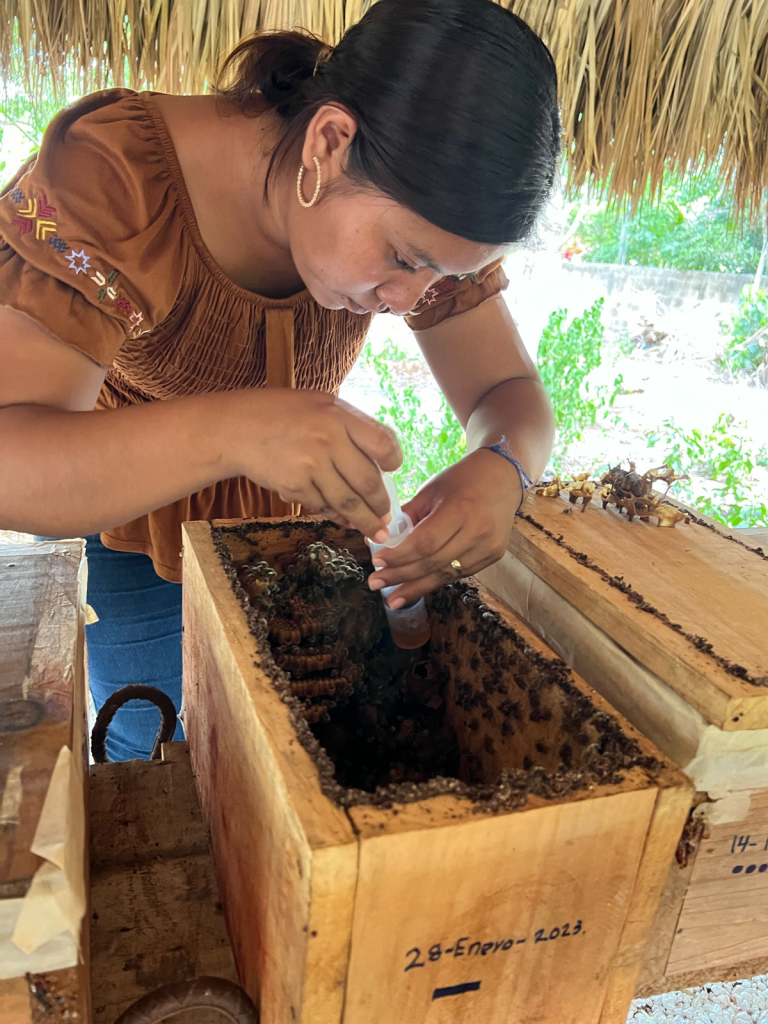
The original locals who never left. The Yucatec Maya are still thriving, vibing, and holding down the fort across Yucatán, Quintana Roo, and Campeche. For the Maya of the Yucatán Peninsula, beekeeping—specifically meliponiculture—is not merely an agricultural practice or a way to make a living. It is a sacred, 3,000-year-old spiritual covenant, an advanced ecological science, and a core pillar of their cosmogony. Deep in Mexico’s dry forests, the Maya have spent thousands of years culturing a relationship with a stingless bee. No stingers required.
Jobones (Jabón)
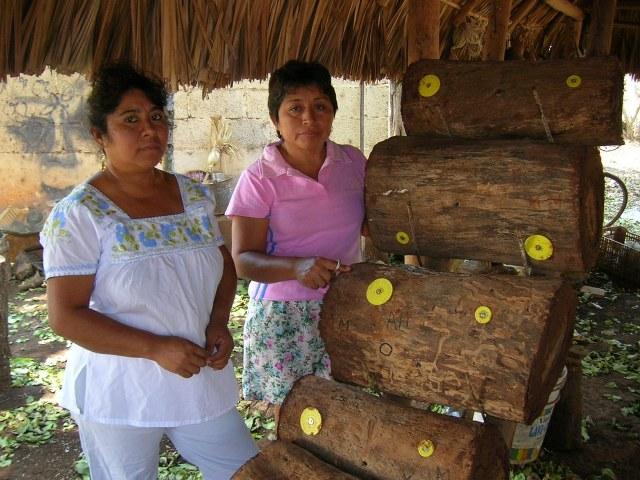
Forget the standard hive-mind boxes—traditional Maya bees prefer living in style. Enter the jabón: a premium, hollowed-out tree log (usually native chacah) sealed at both ends with stone plugs and mud, like a rustic, VIP burrito. These logs are stacked horizontally inside a shady, thatched-roof meliponario to keep the tropical heat away. And forget boring honeycomb grids; these bees are internal architects, crafting delicate, grape-like clusters of wax pots to store their honey. Talk about a sweet setup.
For the ancient Maya, bees weren’t just insects—they were divine roommates. Beekeeping required a shaman, a sacred honey-wine called balché to ask the bees for permission to harvest, and a holy family heirloom hive. Fun fact: when a master beekeeper died, the family had to whisper the news to the hives so the bees wouldn’t pack up and leave out of grief!
 The Golden Nectar